


If you need help studying for the Certified Energy Manager (CEM) exam or just want some more information about what the test is like, you’ve come to the right place.
Click below to take a free CEM practice test!


CEM Exam Eligibility
Before you can register to take the Certified Energy Manager exam, you’ll have to meet at least ONE of the requirements below:
- You need a four-year degree in engineering or architecture.
- If you don’t have this degree, you must possess a Professional Engineer (PE) or Registered Architect (RA) license with at least three years of energy engineering/management experience.
- You need a four-year degree in physics, earth science, environmental science, or technology and at least four years of energy engineering/management experience.
- You need a four-year degree in business and at least five years of energy engineering/management experience.
- You need a two-year associate degree in energy management and at least six years of energy engineering/management experience.
- You need a two-year technical degree and at least eight years of energy engineering/management experience.
- You need at least ten years of verified energy engineering/management experience.
If you meet one of these requirements, you’re set to begin the registration process!
What’s on the Exam?
First, let’s talk about the questions on the exam. There are 130 multiple-choice and true-or-false questions total, but only 120 of the questions will count toward your score. Why is that?
The 10 unscored questions on the exam are called “trial” questions. These are added to the exam to determine if they’re good enough questions to add to future versions of the test.
The trick is that you won’t have any way of knowing which questions are scored and which ones are trial questions. They will appear just like the scored questions throughout the test.
The time limit for the exam is 4 hours. There aren’t any scheduled breaks, but you’re free to take restroom breaks as needed.
Let’s take a closer look at the different sections of the CEM exam.
1. CODES AND STANDARDS
3%-5% of the exam
- IECC
- ISO 50001
- LEED Certification
- Portfolio Manager
- Water Efficiency
- ASHRAE
- Green Buildings
- Energy and Atmosphere
- Energy Star Label
- Materials and Resources
2. ENERGY ACCOUNTING AND ECONOMICS
6%-10% of the exam
- Simple Payback Period
- Time Value of Money
- Present Worth
- Annual Cost Method
- Economic Performance Measures
- Depreciation Methods
- After-Tax Cash Flow Analysis
- Internal Rate of Return
- Energy Accounting
- Point of Use Costs
- Net Present Value
- Present Worth Method
3. ENERGY AUDITS AND INSTRUMENTATION
8%-12% of the exam
- Combustion Analyzers
- Electric Metering
- Temperature Measurement
- Pressure Measurement
- Humidity Measurement
- Energy and Power Measurement
- HHV and LHV
- Role of Audits
- ASHRAE Level 1, 2, 3 Audit
- Audit Equipment
- Flow Measurement
- Heat Measurement
- Behavioral Modification
4. ELECTRICAL SYSTEMS
9%-13% of the exam
- Motor Management Software
- AC Synchronous Motors
- High Efficiency Motors
- Variable Frequency Drives
- Variable Flow Systems
- New vs. Rewound Motors
- Power Factor
- Rate Structure and Analysis
- Variable Speed Drives
- AC Induction Motors
- DC Motors
- Load Factor and Slip
- Motor Speed Control
5. HVAC SYSTEMS
9%-13% of the exam
- Heating, Ventilating, and Air Conditioning (HVAC)
- Affinity Laws
- Psychrometric Chart
- Chillers
- Energy Consumption Estimates
- Cooling Towers
- Variable Refrigerant Flow
- Performance Rating (COP, EER, kW/ton)
- Demand Control Ventilation
- Smart Pumps
- Chilled Beam Systems
- Absorption Cycle
- Air and Water Based Heat Flow
6. INDUSTRIAL SYSTEMS
6%-8% of the exam
- Air Compressor Controls
- Boilers and Thermal Systems
- Fuel Choices
- Steam Systems
- Heat Exchangers
- Turbines
- Compressed Air Systems
- Pumps and Pumping Systems
- Waste Heat Recovery
- Industrial Energy Management
7. BUILDING ENVELOPE
3%-5% of the exam
- Thermal Resistance
- Insulation
- Solar Heat Gain
- Solar Shading
- Thermally Heavy Facilities
- Thermally Light Facilities
- Conduction Heat Loads
- Heat Transfer
- Psychrometric Chart
- Heat Transfer Coefficients
- Vapor Barriers
8. CHP SYSTEMS AND RENEWABLE ENERGY
4%-6% of the exam
- Operating Strategies
- Codes and Standards
- Distributed Generation
- Regulations
- Combined Heat and Power
- HHV and LHV
- Solar, Wind, Biomass, and Hydropower
- Wind Energy Systems
- Heat Recovery Steam Generators
- Micro-Grids
- Battery Storage
- Solar Thermal and Solar Photovoltaic Systems
- Bottoming Cycles
- Topping Cycles
- Combined Cycles
9. FUEL SUPPLY AND PRICING
2%-4% of the exam
- Evaluating Supply Options
- Selection of Energy Supplier in a Deregulated Market
- Electricity as a Commodity
- Procurement of Oil
- Supply and Demand Impact on Pricing
- Procurement of Natural Gas
- Fuel Price Risks
- Trends in Deregulation
10. BUILDING AUTOMATION AND CONTROL SYSTEMS
7%-11% of the exam
- Reset Controls
- Communication Protocols
- Artificial Intelligence
- Building Control Strategies
- Expert Systems
- Self-Tuning Control Loops
- Internet Of Things (IOT)
- Cloud-based Systems
- Energy Management Strategies
- Basic Controls
- Open Protocol Systems
- Power Line Carriers
- PID Controls
- Signal Carriers
- Direct Digital Control
- Central Control
- TCP/IP
11. THERMAL ENERGY STORAGE SYSTEMS
2%-4% of the exam
- Design Strategies
- Storage Media
- Chilled Water Storage
- Advantages and Limitations
- Ice Storage
- Volume Requirements
- Full Storage Systems
- Operating Strategies
- Partial Storage Systems
- Phase Change Materials (PCM)
- Thermal Storage for Heating
12. LIGHTING SYSTEMS
6%-8% of the exam
- Color Rendering Index
- Ballast Factor
- IES Lighting Standard
- Reflectors
- Luminaire-specific Lighting Controls
- Light Sources
- Lamp Life
- Lumens
- Zonal Cavity Design Method
- Strike and Restrike
- Footcandles
- Inverse Square Law
- Room Cavity Ratios
- Visual Comfort Factor
- Ballasts
- Lighting Retrofits
- Efficiency and Efficacy
13. BOILER AND STEAM SYSTEMS
3%-5% of the exam
- Air-to-fuel Ratio
- Boiler Economizers
- Steam Leaks
- Boiler Blowdown
- Flash Steam
- Turbulators
- Condensing Boilers
- Combustion Efficiency
- Excess Air
- Steam Traps
- Condensate Return
- Waste Heat Recovery
- Scaling and Fouling
- HHV and LHV
14. MAINTENANCE AND COMMISSIONING
8%-12% of the exam
- Combustion Control
- Steam Leaks
- Insulation
- Group Relamping
- Preventive Maintenance
- Outside Air Ventilation
- Scheduled Maintenance
- Proactive Maintenance
- Steam Traps
- Behavioral Modification
- Real-time and Continuous Commissioning
- Commissioning Agent
- Facility Design Intent
- Re-commissioning
- Purpose of Commissioning
- Need for Commissioning
- Retro-Commissioning
- Phases of Commissioning
- Commissioning Documentation
15. ENERGY SAVINGS PERFORMANCE CONTRACTING & MEASUREMENT AND VERIFICATION
3%-5% of the exam
- Measurement and Verification Protocols
- Energy Service Companies
- Risk Assessment
- Loans, Stocks and Bonds
- Utility Financing
- Demand Side Management
- Savings Determination
- Contracting and Leasing
- Utility Energy Services Contract (UESC)
- Energy Savings Performance Contracting (ESPC)
How to Register
Once you’ve ensured that you meet all of the eligibility requirements, you can take the first step toward registering for the exam!
To get started, you’ll need to attend a mandatory prep course for training purposes. You can’t register for the exam without taking this course.
Once you’ve successfully completed the course, you’ll need to submit an application to AEE.
When you submit the application, you’ll also need to submit the testing fee, which is $500.
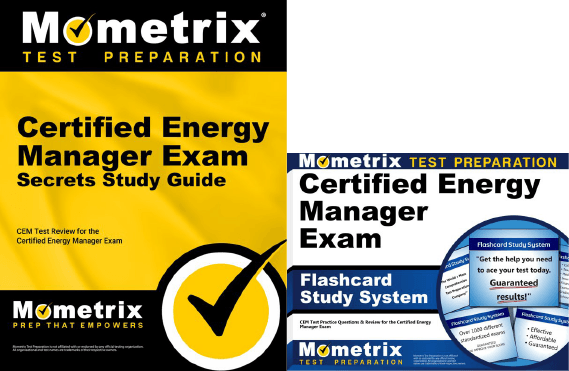
CEM Study Guide and Flashcards
Get practice questions, detailed study lessons, and complex subjects broken down into easily understandable concepts.
CEM Exam Scores
The CEM exam is scored using a scaled scoring method. Here’s how it works:
For every question you answer correctly, you get one point added to your raw score. At the end of the test, your final raw score will be converted to a scaled score. This scaled score will range somewhere between 0 and 1,040.
You will need a score of 700 to pass the test.
The reason your raw score is converted to a scaled score is because everyone who takes the test is given a slightly different set of questions. Since everyone has a different arrangement of questions, and because some questions are harder than others, converting your raw score to a scaled score ensures a more even playing field.
Retaking the Exam
If you didn’t get a passing score on your first try, that’s okay! You can retake the test after a 60-day waiting period.
FAQs
How many questions are on the CEM exam?
The exam contains 130 multiple-choice questions.
How long is the CEM exam?
The exam is timed at 4 hours.
What is the passing score for the CEM exam?
The minimum score you need to pass is 700.