

If you need help studying for the Corrections Officer exam or just want some more information about what the exam is like, you’ve come to the right place.
Click below to take a free Corrections Officer practice test!


What's on the Exam?
Corrections Officer Sample Questions
How to Register
Exam Scores
Retaking the Exam
What Test-Takers Are Saying
FAQs
Eligibility
Before you can register to take the Corrections Officer exam, you'll need to have at least one year of work experience at the officer level.
What’s on the Exam?
There are 200 multiple-choice and true-or-false questions, and you'll have a time limit of 4 hours. There aren’t any scheduled breaks, but you’re free to take restroom breaks as needed.
The exam is split into 11 subject areas:
1. Managing Offenders
7% of the exam
- Orient new arrivals on rules, procedures, and expectations
- Establish rapport with inmates
- Enforce rules and regulations consistently
- Conduct cell inspections and searches
- Intervene in crises as needed
- Manage conflicts effectively
- Follow the use-of-force continuum when appropriate
- Provide verbal and written counseling to inmates
- Write detailed disciplinary and incident reports
2. Control/offender Movement
9% of the exam
- Observe, monitor, and supervise the movement of offenders and their property
- Properly identify and escort offenders, both individually and in groups
- Implement schedules for controlled offender movement
- Enforce custody privileges and disciplinary restrictions
- Issue and receive offender passes and appointment slips
- Receive and review offender requests for bed, cell, or unit moves, and make recommendations
- Restrict movement during scheduled physical counts of offenders
- Implement emergency operational plans when necessary
3. Maintain Health, Safety, Sanitation and Communications
13% of the exam
- Develop and maintain a cleaning schedule
- Supervise the cleaning of industrial areas
- Supervise offenders’ hygiene habits
- Document the distribution of authorized items
- Inventory and distribute authorized items
- Order or request authorized supplies and items
- Ensure proper labeling and handling of hazardous materials
- Implement health and safety memos and notifications
- Implement proper health procedures for offenders with infectious diseases
- Report changes in offender behavior
- Report security violations
- Search offenders and their property
- Submit health, safety, and sanitation recommendations to the appropriate departments
4. Knowledge of Facility Climate
1% of the exam
- Agency mission and purpose
- Agency policies and procedures
- State and federal laws, including EEO and Sexual Harassment regulations
- Standards of professionalism
- Available training programs
- Understanding ethnic differences
- Stress management techniques
- Proper use of force
- Use of weapons
- Using equipment and tools correctly
5. General Skills/equipment Control
13% of the exam
- Leadership skills
- Management abilities
- Public relations techniques
- CPR and first aid training
- Interpersonal communication
- Non-verbal communication
- Written communication
- Inspect keys, tools, equipment, and shadow boards
- Inventory keys, tools, and equipment at the beginning and end of each shift
- Log in and out keys, tools, and equipment in work areas
- Maintain physical control of keys, tools, and equipment
- Report broken or missing keys, tools, and equipment
- Conduct search procedures
6. Ethics/Law
17% of the exam
- History of courts and corrections
- "Hands-off" vs. "hands-on" approaches
- Prison Litigation Reform Act
- Searches and seizures
- "Reasonable Suspicion" standard
- Theories of liability
- How lawsuits work
- Indemnification
- Discovery process
- Trials and appeals
- Handling AIDS in correctional settings
- Ethical vs. unethical behavior
- Investigating unethical behavior
- Interviewing and maintaining confidentiality
- Evidence and polygraph use
- Surveillance and monitoring techniques
- Employee rights
- Writing the investigative report
7. General
14% of the exam
- Understanding correctional facility operations
- Roles and responsibilities of corrections officers
- Basic criminal justice concepts
- Emergency response protocols
- Correctional facility safety standards
8. Wellness/Safety
8% of the exam
- Physical fitness requirements
- Mental health awareness
- Stress management techniques
- Safety protocols for corrections officers
- Personal protective equipment (PPE) use
9. Prison Rape Elimination Act (PREA)
5% of the exam
- PREA standards and regulations
- Identifying and reporting sexual abuse
- PREA compliance audits
- Support services for victims
- Training requirements under PREA
10. Leadership
10% of the exam
- Leadership styles and techniques
- Building effective teams
- Decision-making skills
- Conflict resolution strategies
- Mentoring and coaching subordinates
11. Team Building
3% of the exam
- Team dynamics and collaboration
- Effective communication within teams
- Building trust and cohesion
- Roles and responsibilities within a team
- Strategies for enhancing team performance
Corrections Officer Sample Questions
Take this quick quiz to test your knowledge!
Corrections Officer practice questions with answers and explanations:
- Which of the following is the most accurate statement regarding constitutional rights as they relate to prisoners?
- Prisoners can never lose constitutional rights
- Prisoners lose all constitutional rights
- Prisoners lose some constitutional rights — Correct answer
- Only sentenced prisoners lose constitutional rights
Explanation: Inmates lose constitutional rights upon being institutionalized, including liberty and rights to search and seizure. Sentenced prisoners lose even more constitutional rights, such as the right to vote. The loss of rights is only to the extent the facility needs to maintain safety and security and are not just arbitrarily withheld. - Which of the following is true regarding an inmate’s access to books, newspapers, magazines, and similar materials?
- Inmates are not permitted to have access to these materials.
- Inmates can have access to these materials as long as they do not have an amount that presents a sanitation concern or search problem for staff. — Correct answer
- An inmate’s constitutional rights permit them to have as many books, newspapers, and magazines as they wish.
- Only inmates in punitive segregation or isolation can have books, magazines, and similar materials.
Explanation: Inmates are permitted to have as many books as they desire, as long as it does not pose a sanitation problem or search problem for staff members. Therefore, since inmates can have books, Choice A is incorrect. The limit on books rules out Choice C, and inmates in punitive segregation may have books restricted. They certainly don’t receive books or magazines more than general population inmates, so Choice D is incorrect. - You are an officer investigating an inmate infraction when you question an inmate about violating an institutional rule. The inmate refuses to talk, stating he was never given his Miranda warnings. You should respond by informing the inmate in what way?
- Advising the inmate of their Miranda warnings and then question the inmate.
- You can never question the inmate until they are informed of their Miranda warnings and have an opportunity to consult with an attorney.
- Advise the inmate of their due process then commence the questioning.
- Advise the inmate that Miranda warnings are only applicable to criminal investigations. — Correct answer
Explanation: Miranda warnings relate to criminal investigations, not administrative procedures, such as an infraction investigation. Therefore, Choices A and B are incorrect because Miranda warnings are not necessary, and Choice C is incorrect because one can question an inmate without due process because it is an administrative proceeding. - When it comes to liability in a correctional setting, what are the two most common forms?
- Personal liability and vicarious liability — Correct answer
- Personal liability and supervisory liability
- Vicarious liability and liability through inaction
- Excessive force and personal liability
Explanation: Correctional staff can be held personally liable for the actions of others through vicarious liability. Choices B and C are fictitious. Choice D is incorrect because excessive force is a situation that can lead to a liability, but it is not a type of liability. - Which of the following is the main impact of the Prison Rape Elimination Act (PREA) on correctional facilities?
- They have to schedule yearly audit conducted by trained, independent auditors. — Correct answer
- They have to report directly to Congress any instance of sexual abuse.
- They have to separate rapists from other prisoners.
- The PREA Act has no direct impact on correctional facilities.
Explanation: Facilities are required to get independent audits. Choice B is incorrect because although PREA was established by Congress, there is no individual reporting requirement to Congress. Choice C is incorrect because there are no requirements for separation of prisoners, and Choice D is incorrect because PREA has had a major impact on correctional facilities.
How to Register
To get started with the registration process, you'll need to fill out an application from the ACA website. When you submit your application, you'll also need to submit the $190 exam fee (ACA members only pay ($150).
Once your application is approved, you'll be sent information on how to set up a testing appointment.
Exam Scores
The scoring system for this exam is very basic: every question you answer correctly give you a point. To pass, you'll need to answer at least 70% of the questions correctly.
If you answer at least 90% of the questions correctly, you will pass with an honors certificate!
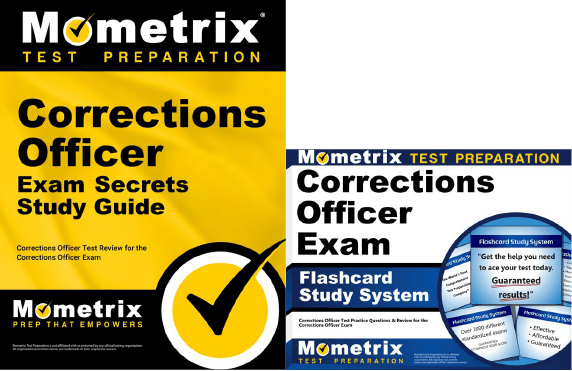
Corrections Officer Study Guide and Flashcards
Get practice questions, detailed study lessons, and complex subjects broken down into easily understandable concepts.
Retaking the Exam
If you didn’t get a passing score on your first try, that’s okay! You can retake the test as many times as you want (and the first retake is free!).
What Test-Takers Are Saying
Don’t just take our word for it! See what real test-takers are saying about the Corrections Officer exam:
“Remember vocab terms like risk, indemnity, subrogation, peril, negligence, etc. Get those down, then focus on Homeowners and Dwelling policy scenarios. If grandma fell down the stairs, would she be covered under HO-3? If you hit a deer while exiting the freeway, is that collision? What are parts of an insuring agreement?”

ADHDStreetRunner
“Know how, and in what order, deductibles apply in (particularly homeowners) situations with multiple types of losses. Know how to calculate coinsurance penalties. You need to THINK your way through each question, not memorize the answers to the questions on your practice exam.”

MBRCatz
Insurance Journal Online
“Each state is different. You will need to be able to distinguish between a general question 'how is it everywhere?' and a state question 'how is it in my state?' Pay close attention to those questions which ask 'are all of the above, except'—this is a trick, because now you need to know which one it is not.”
hartshoc
CollegeVine
FAQs
How many questions are on the Corrections Officer exam?
The exam contains 200 questions.
What is the time limit for the Corrections Officer exam?
The exam is timed at 4 hours.
What is the passing score for the Corrections Officer exam?
You’ll need to answer at least 70% of the questions correctly to pass. Answering at least 90% correctly will result in a “Passed with Honors” certificate!
How much does the Corrections Officer exam cost?
The testing fee is $190.
Mometrix Test Preparation is not affiliated with or endorsed by any official testing organization. All organizational and test names are trademarks of their respective owners.