

If you need help studying for the Contractor General Building exam or the Contractor Law & Business exam, you’ve come to the right place!
Click below to take a free General Building and Law & Business practice test.



What’s on the Test?
The exams are slightly different depending on which state you want to be licensed in. The number of questions can range anywhere from 50 to 120, and the time limit for each exam could be anywhere from 2 to 6+ hours. Check with your state licensing board to get the details for your state.
The contents of each exam will also vary per state, but the basic topics are generally the same:
General Contractor Exam
- Safety
- Planning and estimating
- Finish trades
- Doors, windows, and glazing
- Specialty equipment and conveyance systems
- Masonry
- Framing and structural components
- Core trades
- Concrete
- Metals
- Site construction
Law & Business Exam
- Public works
- Payroll and taxes
- Safety
- Employment requirements
- Insurance and liens
- Contract requirements and execution
- Risk management
- Recordkeeping
- Personnel and labor
- Business organization and licensing
- Business finances
- Estimating and bidding
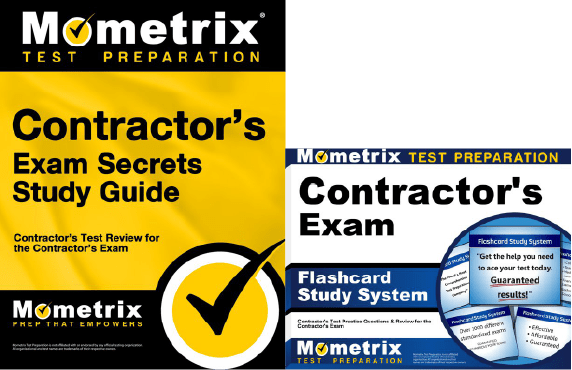
General Contractor Study Guide and Flashcards
Get practice questions, detailed study lessons, and complex subjects broken down into easily understandable concepts.
General Contractor License Online Prep Course
If you want to be fully prepared, Mometrix offers an online Contractor GBLB prep course. The course is designed to provide you with any and every resource you might want while studying. The Contractor GBLB course includes:
- 60+ Review Lessons Covering Every Topic
- 550 General Contractor License Practice Questions
- 550+ Digital Flashcards
- Money-back Guarantee
- Mobile Access
The General Contractor License online course is designed to help any learner get everything they need to prepare for the Contractor GBLB exams. Click below to check it out!
How to Register
Each state has its own set of registration requirements and instructions. Typically, you'll submit an application and any qualifying documents, as well as a registration/testing fee to your state licensing board. Once your application is approved, you should receive instructions on how to register for your exam(s).
Test Scores
The passing score requirements and score reporting process look a little different for each state. Most states set the passing score at 70%, while others require at least 75%.
In some cases, you'll get a printed score report as soon as you finish the exam; in other cases, you might have to wait for your results to be sent to you.
FAQs
How many questions are on the exams?
It depends on the state, but there are typically between 50 and 120 questions on the exam.
How long are the exams?
It depends on the state. The time limit for each exam could range anywhere from 2 to 6+ hours.
What are the passing scores for the exams?
Usually, you will need to answer at least 70% of the questions correctly to pass. Some states have the requirement set at 75%.
Mometrix Test Preparation is not affiliated with or endorsed by any official testing organization. All organizational and test names are trademarks of their respective owners.