


If you’re preparing for the NCLEX® exam, you’ve come to the right place. Whether you’re taking the NCLEX-RN or NCLEX-PN, we have free practice tests and study resources to help you prepare.
Choose your exam below to take a free NCLEX practice test!

NCLEX Exam Outlines
Computer-Adaptive Testing
Online NCLEX Prep Courses
FAQs
Subject Review Quizzes
About the NCLEX
The NCLEX (National Council Licensure Examination) is a standardized exam used to determine whether a candidate is prepared to begin practice as an entry-level nurse. There are two versions of the exam:
- NCLEX-RN: This exam is required to become a licensed Registered Nurse (RN).
- NCLEX-PN: This exam is required to become a licensed Practical Nurse (LPN) or Vocational Nurse (LVN).
Both exams are computer-adaptive tests administered by Pearson VUE. The number of questions you receive depends on how well you’re performing, so every test-taker will have a different experience.
NCLEX Exam Outlines
NCLEX-RN
The NCLEX-RN exam covers eight content areas. Here’s a breakdown of each section and the approximate percentage of questions you can expect:
1. Management of Care
15%-21% of the exam
- Integrating advance directives into the client’s plan of care
- Delegating and supervising care provided by others
- Organizing workload to manage time effectively
- Practicing and advocating for cost-effective care
- Initiating, evaluating, and updating the client’s plan of care
- Providing education to clients and staff about client rights and responsibilities
- Collaborating with multidisciplinary team members when providing client care
- Maintaining client confidentiality and privacy
- Providing and receiving handoff of care on assigned clients
- Prioritizing the delivery of client care based on acuity
- Recognizing and reporting ethical dilemmas
- Practicing in a manner consistent with the nurses’ code of ethics
- Providing care within the legal scope of practice
2. Safety and Infection Prevention and Control
10%-16% of the exam
- Assessing clients for allergies and intervening as needed
- Protecting clients from injury
- Properly identifying clients when providing care
- Verifying appropriateness and accuracy of treatment orders
- Participating in emergency planning and response
- Following procedures for handling biohazardous and hazardous materials
- Educating clients on safety issues
- Acknowledging and documenting practice errors and near misses
- Reporting, intervening, or escalating unsafe practices by health care personnel
- Facilitating appropriate and safe use of equipment
- Applying principles of infection prevention (e.g., hand hygiene, aseptic technique)
- Educating clients and staff about infection prevention measures
- Following requirements when using restraints
3. Health Promotion and Maintenance
6%-12% of the exam
- Providing care and education for clients from birth through 2 years old
- Providing care and education for clients ages 3 through 17 years
- Providing care and education for adult clients ages 18 through 64 years
- Providing care and education for adult clients ages 65 and older
- Providing prenatal care and education
- Providing post-partum care and education
- Assessing and educating clients about health risks based on family, population, and community
- Assessing client readiness to learn, learning preferences, and learning barriers
- Planning and participating in community health education
- Educating clients about preventative care and health maintenance
- Providing resources to minimize communication barriers
- Performing targeted screening assessments
- Performing comprehensive health assessments
4. Psychosocial Integrity
6%-12% of the exam
- Assessing clients for abuse or neglect and reporting, intervening, or escalating as needed
- Incorporating behavioral management techniques when caring for clients
- Assessing clients for substance abuse or toxicities and intervening appropriately
- Assessing clients’ ability to cope with life changes and providing support
- Assessing the potential for violence and using safety precautions
- Incorporating client cultural practices and beliefs when planning care
- Providing end-of-life care and education to clients
- Assessing client support systems to aid in planning care
- Providing care for clients experiencing grief or loss
- Providing care and education for acute and chronic psychosocial health issues
- Assessing psychosocial factors and planning appropriate interventions
- Recognizing non-verbal cues related to physical or psychological stressors
- Using therapeutic communication techniques
5. Basic Care and Comfort
6%-12% of the exam
- Assisting clients in compensating for physical or sensory impairments
- Assessing and managing clients with bowel and bladder elimination issues
- Performing skin assessments and implementing measures to maintain skin integrity
- Applying, maintaining, or removing orthopedic devices
- Implementing measures to promote circulation
- Assessing clients for pain and intervening appropriately
- Providing non-pharmacological comfort measures
- Evaluating client nutritional status and intervening as needed
- Providing client nutrition through tube feedings
- Evaluating client intake and output and intervening as needed
- Assessing performance of activities of daily living and assisting when needed
- Assessing client sleep and rest patterns and intervening as needed
- Performing post-mortem care
6. Pharmacological and Parenteral Therapies
13%-19% of the exam
- Administering blood products and evaluating client response
- Accessing and maintaining central venous access devices
- Performing calculations needed for medication administration
- Evaluating client response to medications
- Educating clients about medications
- Preparing and administering medications using the rights of medication administration
- Reviewing pertinent data prior to medication administration
- Participating in the medication reconciliation process
- Titrating medication dosage based on assessment and orders
- Disposing of medications safely
- Handling and administering high-risk medications safely
- Monitoring intravenous infusions and maintaining sites
- Handling and administering controlled substances within regulatory guidelines
7. Reduction of Risk Potential
9%-15% of the exam
- Assessing and responding to changes and trends in client vital signs
- Performing testing within scope of practice
- Monitoring results of diagnostic testing and intervening as needed
- Inserting, maintaining, or removing a urinary catheter
- Inserting, maintaining, or removing a peripheral intravenous line
- Applying and maintaining devices to promote venous return
- Using precautions to prevent injury or complications associated with procedures
- Evaluating client responses to procedures and treatments
- Recognizing trends and changes in client condition and intervening as needed
- Performing focused assessments
- Educating clients about treatments and procedures
- Providing preoperative and postoperative education
- Managing clients during and after moderate sedation
8. Physiological Adaptation
11%-17% of the exam
- Monitoring and caring for clients on a ventilator
- Managing the care of clients receiving hemodialysis or continuous renal replacement therapy
- Managing the care of clients with fluid and electrolyte imbalances
- Managing the care of clients with impaired ventilation or oxygenation
- Providing postoperative care
- Providing pulmonary hygiene
- Performing wound care and dressing changes
- Performing suctioning
- Providing ostomy care and education
- Monitoring and maintaining arterial lines
- Assisting with invasive procedures
- Recognizing signs and symptoms of complications and intervening
- Performing emergency care procedures
NCLEX-PN
The NCLEX-RN exam covers eight content areas. Here’s a breakdown of each section and the approximate percentage of questions you can expect:
1. Coordinated Care
18%-24% of the exam
- Providing information about advance directives
- Advocating for client rights and needs
- Assigning client care to appropriate personnel
- Participating in updating the client’s plan of care
- Maintaining client confidentiality
- Following up with the client after discharge
- Organizing and prioritizing care based on client needs
- Practicing according to the nursing code of ethics
- Participating in the client consent process
- Recognizing limitations and seeking assistance when needed
- Responding to unsafe practices by health care providers
- Following regulations for reporting mandatory issues
- Providing care within the legal scope of practice
2. Safety and Infection Prevention and Control
10%-16% of the exam
- Identifying client allergies and intervening as appropriate
- Verifying the identity of the client
- Assisting in and reinforcing education to the client about safety precautions
- Using transfer assistive devices
- Evaluating the appropriateness of the health care provider’s order for the client
- Participating in preparation for internal and external disasters
- Using safe client handling techniques
- Identifying and addressing unsafe conditions in health care and home environments
- Following protocol for timed client monitoring
- Implementing least restrictive restraints or seclusion
- Acknowledging and documenting practice error
- Assuring availability and safe functioning of client care equipment
- Initiating and participating in security alerts
- Applying principles of infection control
3. Health Promotion and Maintenance
6%-12% of the exam
- Providing care that meets the needs of clients from birth through 2 years old
- Providing care that meets the needs of clients ages 3 through 17 years
- Providing care that meets the needs of adult clients ages 18 through 64 years
- Providing care that meets the needs of older adult clients ages 65 and over
- Assisting with care for the antepartum client
- Monitoring a client in labor
- Monitoring recovery of stable postpartum clients
- Collecting data for health history
- Collecting baseline physical data
- Comparing clients to developmental milestones
- Assisting clients with expected life transitions
- Identifying clients in need of immunizations
- Participating in health screening or health promotion programs
4. Psychosocial Integrity
9%-15% of the exam
- Reinforcing education to caregivers and family on managing clients with behavioral disorders
- Incorporating behavioral management techniques when caring for clients
- Collecting data regarding client psychosocial functioning
- Identifying client use of effective and ineffective coping mechanisms
- Recognizing stressors that affect client care
- Assisting clients in coping with or adapting to stressful events and health changes
- Collecting data on a client’s potential for violence to self or others
- Assisting in managing the care of angry or agitated clients
- Planning care with consideration of client spiritual, cultural, and gender identity
- Providing end-of-life care and education to clients
- Identifying signs and symptoms of substance abuse or withdrawal
- Providing emotional support to clients
- Using therapeutic communication techniques with clients
5. Basic Care and Comfort
7%-13% of the exam
- Providing care to clients with bowel or bladder management protocols
- Performing irrigation
- Providing for mobility needs
- Using measures to maintain or improve client skin integrity
- Providing care to immobilized clients based on need
- Assisting in the care of clients with visual or hearing impairments
- Promoting alternative or complementary therapies in client care
- Providing non-pharmacological pain relief measures
- Evaluating pain using standardized rating scales
- Monitoring and providing for clients’ nutritional needs
- Monitoring client intake and output
- Assisting with activities of daily living
- Providing measures to promote sleep and rest
6. Pharmacological Therapies
10%-16% of the exam
- Performing calculations needed for medication administration
- Reinforcing education to clients regarding medications
- Evaluating client response to medications
- Following the rights of medication administration
- Maintaining medication safety practices
- Reconciling and maintaining medication lists or administration records
- Collecting required data prior to medication administration
- Administering medication by oral route
- Administering intravenous piggyback (secondary) medications
- Administering medication via gastrointestinal tubes
- Administering subcutaneous, intradermal, or intramuscular medications
- Counting controlled substances and reporting discrepancies
- Maintaining pain control devices
7. Reduction of Risk Potential
9%-15% of the exam
- Checking and monitoring client vital signs
- Performing blood glucose monitoring
- Collecting specimens for diagnostic testing
- Monitoring diagnostic or laboratory test results
- Identifying signs or symptoms of potential prenatal complications
- Performing focused data collection based on client condition
- Applying and checking compression stockings or sequential compression devices
- Identifying client risk and implementing interventions
- Using precautions to prevent injury or complications from procedures
- Evaluating client oxygen saturation
- Assisting with client care before and after surgical procedures
- Monitoring client responses to procedures and treatments
- Maintaining and removing peripheral intravenous (IV) catheters
8. Physiological Adaptation
7%-13% of the exam
- Recognizing and reporting basic abnormalities on a client cardiac monitor strip
- Providing care for client drainage devices
- Providing care for clients on a ventilator
- Providing care for clients with a tracheostomy
- Providing care for clients with an ostomy
- Providing care for clients receiving peritoneal dialysis or hemodialysis
- Performing wound care and dressing changes
- Removing wound sutures or staples
- Intervening to improve client respiratory status
- Identifying signs and symptoms related to acute or chronic illness
- Providing care for clients with fluid and electrolyte imbalances
- Responding and intervening in client life-threatening situations
- Recognizing and reporting changes in client condition
Computer-Adaptive Testing (CAT)
Both the NCLEX-RN and NCLEX-PN are computer-adaptive tests. Basically, this means that the questions will become harder or easier as you go through the exam, based on how well you’re answering the questions.
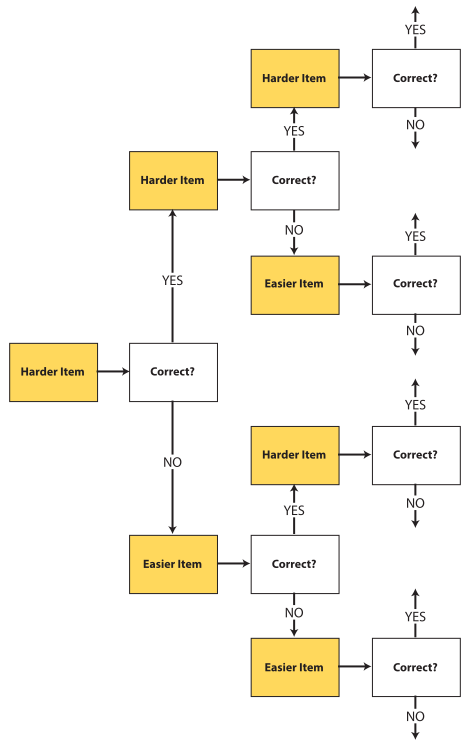
For example, say you answered the first question correctly. The first question is of medium difficulty, so the next question will be slightly harder. Then, let’s say you answered the second question incorrectly. The next question would then be a medium question.
Online NCLEX Prep Course
If you want to be fully prepared, Mometrix offers online NCLEX prep courses. The courses are designed to provide you with any and every resource you might want while studying. Each NCLEX course includes:
- Review Lessons Covering Every Topic
- NCLEX Practice Questions
- Digital Flashcards
- Instructional Videos
- Money-back Guarantee
- Mobile Access
The NCLEX prep courses are designed to help any learner get everything they need to prepare for their NCLEX exam. Click below to check them out!
FAQs
What is the NCLEX RN?
The NCLEX RN exam is a standardized exam used to determine whether or not you are eligible to begin practice as an entry-level nurse.
What is the NCLEX PN?
The NCLEX PN exam is required to become a licensed practical nurse or vocational nurse.
What percentage do you have to get on the NCLEX to pass?
The logit score for the NCLEX is 0.00. This means that you should be answering the moderate-difficulty questions correctly at least 50% of the time.
How many times can you fail the NCLEX?
You can take the NCLEX up to 8 times in one year with a waiting period of 45 days in between each attempt.
Is the NCLEX the same for RN and BSN?
Yes, the NCLEX RN test is the same for RN’s and BSN’s.
Is the NCLEX exam multiple choice?
About 90% of the questions on the NCLEX exam are multiple choice.
How many questions do you need to pass NCLEX?
You will be able to pass the NCLEX exam if you answer at least 50% of the moderately difficult questions correctly.
How much is it to take the NCLEX?
Graduates must pay a one-time fee of $200. This must be done during the registration process.
How long do you have to take your NCLEX after graduation?
You can apply for the test as soon as your graduate. The most common amount of time taken between graduation and taking the test is around 3-5 weeks.
How many times can you retake the NCLEX?
You can take the NCLEX up to 8 times in one year with a waiting period of 45 days between each attempt.
What is the meaning of NCLEX?
NCLEX means National Council Licensure Examination.
How long does it take to get results back from NCLEX?
Your official results will be sent to you approximately six weeks after the exam is taken.
How much time do you have to take the NCLEX?
You will have 5 hours to complete the exam. This includes two 10-minute breaks.
How many days do you have to wait to retake the NCLEX?
You must wait 45 days before retaking the NCLEX.
How long does it usually take to get your ATT for NCLEX?
It should not take any longer than two weeks to receive your ATT from Pearson VUE.
Is the NCLEX timed?
Yes. The maximum time for the NCLEX is 5 hours.
How many questions can you miss on the NCLEX PN?
You must answer at least 50% of the moderately difficult questions to pass the NCLEX PN.
How much does it cost to take the NCLEX PN?
During the registration process, you must pay a one-time exam fee of $200.
Subject Review Quizzes
One of the most important parts of preparing for a test is determining which topics you need to brush up on as you study.
To get started with a self-assessment of your knowledge, click on one of the topics below!
Body Systems & Disorders
NCLEX and NCLEX-PN are registered trademarks of National Council of State Boards of Nursing, Inc., which is not affiliated with Mometrix Test Preparation and does not endorse this page.